Full passage
They sat in the warehouse loft after supper with a candle between them and a scrap of packing paper spread over a crate. Nils had drawn the Cyrillic alphabet badly but legibly, arranging the letters in rows. Rory copied each one beneath.
‘That is not a B,’ Nils said.
‘It looks like a B.’
‘It is V.’
‘That is unreasonable.’
‘Letters don’t care.’
‘This one seems actively hostile.’
Nils tapped another. ‘This is R.’
‘That looks like a P.’
‘It is R.’
‘And this?’
‘N.’
‘It looks like H.’
‘It is N.’
Rory put down the pencil and rubbed his eyes. ‘I have survived guards, false papers, a fall into a dung heap, and Girard’s conversation. This may defeat me.’
Nils pushed the pencil back towards him. ‘Again.’
‘You have no mercy.’
‘Mercy makes bad letters.’
Rory took the pencil.
The boy’s teaching was abrupt, impatient, and effective. He had little grammar and less theory, but he knew the shapes and sounds as things lived with rather than studied. He made Rory say them aloud until the warehouse cat abandoned the loft in disgust.
After several nights, Rory could pick out sounds from names. After a week, he could copy short words. After two, he could write his temporary name in Cyrillic badly enough that Nils said it resembled a drunk spider but was not entirely without hope.
Ruar MacLaren.
The letters altered him.
Written in French script, the name looked like a compromise. Written in Cyrillic, even badly, it looked like a prophecy he had not consented to.
‘Again,’ Nils said.
Rory examined the page. ‘Not that one.’
‘What one?’
He hesitated, then wrote carefully in Latin letters:
‘Ruairidh.’
Nils frowned. ‘Too many sounds.’
‘It is my name.’
‘Ruar is easier.’
‘Easy names are remembered.’
‘Hard names are changed.’
‘Then change it.’
Nils considered the challenge with great seriousness. He said the name several times under his breath, each version worse than the last.
‘Ruarid,’ he tried.
‘Painful.’
‘Rurid.’
‘That sounds like a disease.’
‘Rurik.’
Rory paused.
The sound sat oddly between them. Not his name, but not entirely separate from it. It carried a faint echo of Ruairidh, but had shifted eastward, hardened, simplified. Rurik. A name known in the old stories of the eastern lands, Nils said after a while, though his explanation was fragmentary and perhaps half invented. A prince, or a founder, or a man people claimed when they wanted their power to seem ancient. Nils was vague on history but confident in the sound.
‘Rurik,’ Rory repeated.
It felt less like disguise than transformation.
‘I am not a prince.’
Nils gave him a withering look. ‘I noticed.’
‘Nor a founder.’
‘You might found trouble.’
‘That at least is possible.’
Nils wrote the name in Cyrillic.
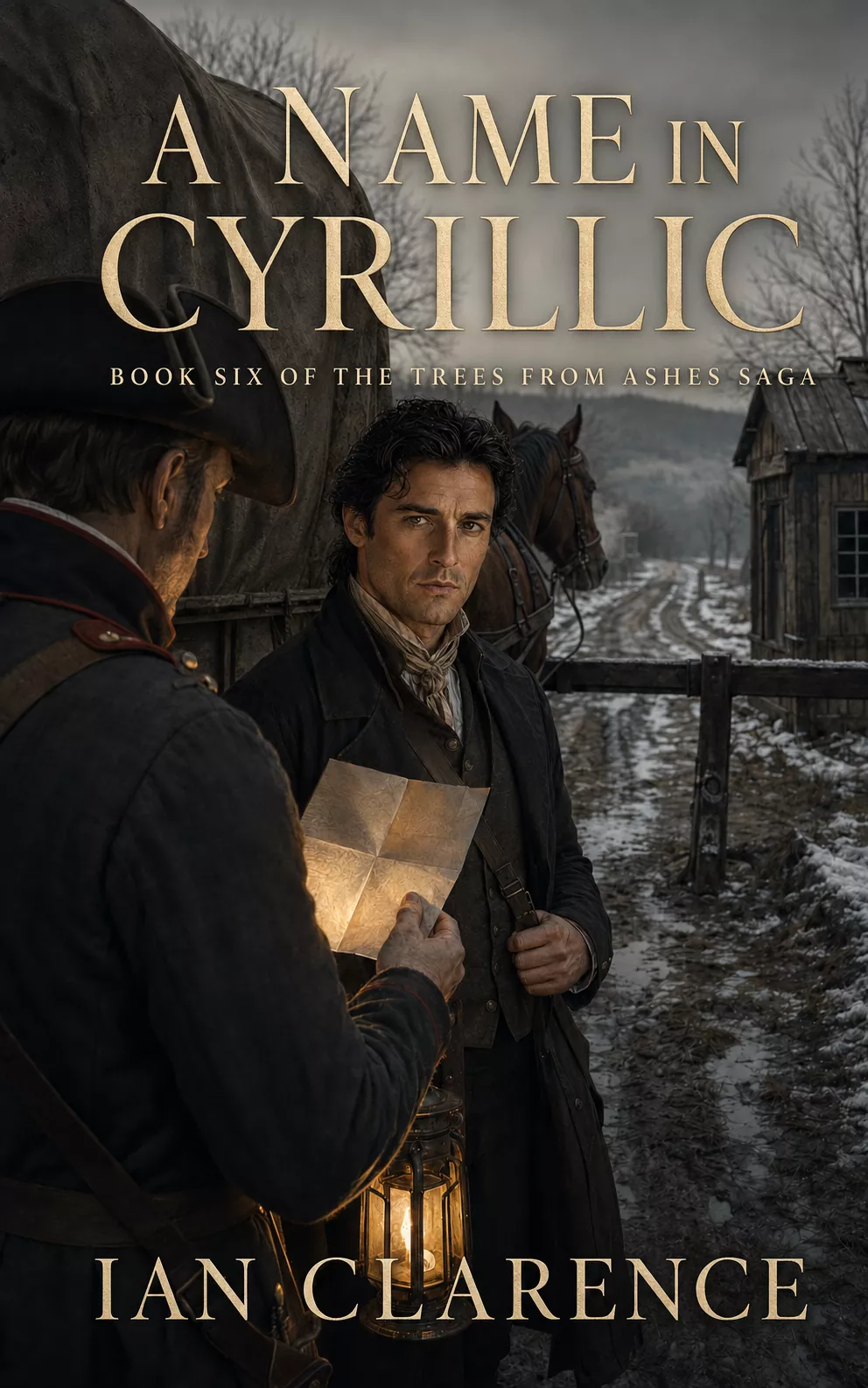
Рюрик.
Rory stared at it.
The letters were strange, compact, and unexpectedly beautiful. They did not carry Killiecrankie, Paris, Laurent, MacKail, or any of the names men might search for in French records. Yet the sound was close enough that he could imagine turning if called.
Not surrender. Translation.
‘Can you bear it?’ Nils asked, unconsciously echoing Adler.
Rory did not answer at once.
Could he bear it? Ruar had been useful. Étienne and Pierre had been costumes. Rory was the name his mother had spoken, the name his father had written, the name that belonged to baptism, childhood, and every family story in which he still had a place. Ruairidh was the older form, the hidden form. Rurik was something else: not replacement, perhaps, but a seed planted in foreign ground.
‘I can bear it on paper,’ he said.
‘Speech later.’
‘Yes.’
Nils nodded, as if this were sensible.
That night Rory copied the Cyrillic name until the candle guttered.
Рюрик.
Rurik.
Rory.
Ruairidh.
Ruar.
The names circled one another like men unsure whether they were enemies.